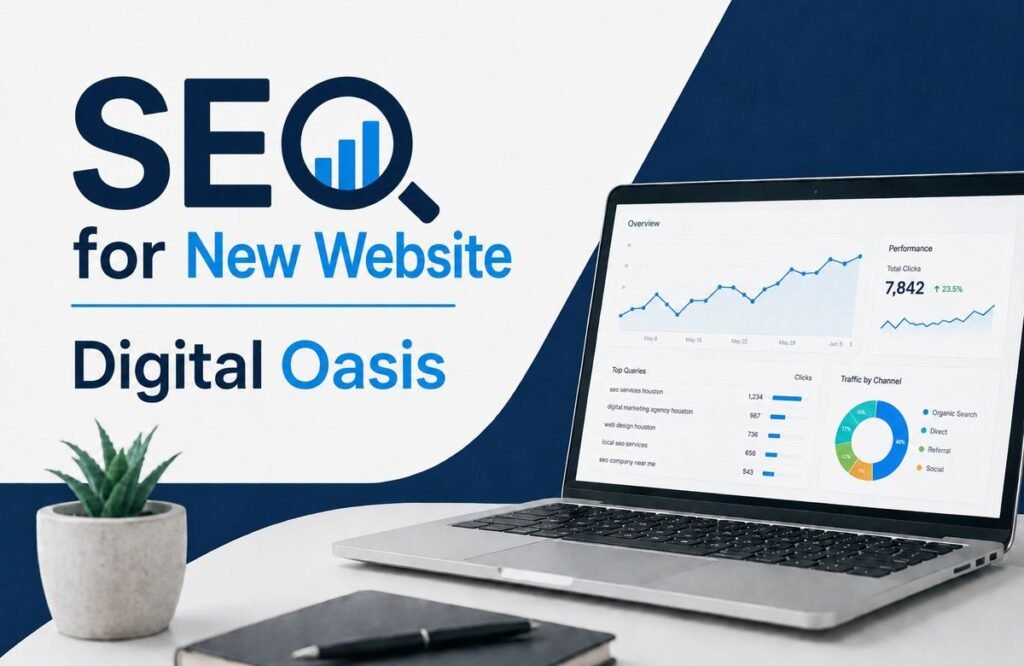
Here’s something most web designers won’t tell you after handing over your new site. Google has absolutely no idea it exists. None. You could have the most beautiful, fastest, most well-structured website in your industry and Google still treats it like a blank wall. No rankings. No traffic. No leads. Just silence.
That’s the reality every new website owner faces on day one. And the only way through it is SEO for new website done right from the very beginning.
At Digital Oasis, we’re the best at delivering SEO services that build real Google rankings fast. Based in Houston, TX. Google Certified Partners with 15+ years of experience. Start with your free SEO audit today and get a clear honest picture of exactly what your new site needs to start climbing.
Nobody Finds a New Website by Accident
Organic traffic doesn’t happen by luck. It doesn’t happen because your site looks good. It doesn’t happen because you shared your launch on Instagram.
It happens because of deliberate, structured SEO for new website strategy executed consistently.
Here’s a stat worth sitting with. According to Ahrefs, over 90% of all web pages get zero organic traffic from Google. Zero. Nine out of ten websites are completely invisible on the world’s most used search engine.
Those aren’t all bad websites. Most just skipped the SEO process or did it wrong. Getting into the 10% that actually rank is completely achievable. It just takes the right steps in the right order.

Step 1 — Fix Your Technical Foundation Before Anything Else
Writing content on a broken technical foundation is like painting over a cracked wall. Looks fine for a minute. Falls apart soon after.
SEO for new website always starts with technical health.
Site Speed Changes Everything
Google made page speed an official ranking factor in 2018. Sites loading under two seconds consistently outrank slower ones. According to Google, 53% of mobile users abandon any site taking longer than three seconds to load. That’s more than half your potential visitors gone before seeing a single word.
New websites are often slow right out of the box. Unoptimized images are the biggest culprit. Our website development services include full speed optimization as standard. Compress every image. Enable caching. Use a content delivery network. Minimize CSS and JavaScript. These aren’t extras. They’re the price of entry.
Submit Your Site to Google Immediately
Google finds new websites through crawling. But a brand new site has zero links pointing to it. Google’s bots might never find it on their own.
Submit your XML sitemap through Google Search Console on day one. This directly tells Google which pages exist and asks it to index them. Without this step you could wait months for Google to find you naturally. Set up Search Console immediately. Check it weekly for crawl errors.
Mobile Optimization Is Not Optional
In 2019 Google changed to using something called mobile-first indexing, which means Google looks at the mobile version of your website to work out where to place you in search results. So, if your new site doesn’t work properly on a phone, or is slow to appear using mobile internet, it will drop down the rankings.
You should use Google’s Mobile-Friendly Test on your site and sort out all the problems it shows you before continuing.
Step 2 — Keyword Research Before Writing a Single Word
This is where most new website owners make their biggest mistake. They start writing content about whatever feels relevant and hope Google figures it out.
Google doesn’t guess. You have to tell it exactly what each page is about using the specific words your customers actually search for.
Our keyword research services find exactly what your potential customers type into Google and build your entire content strategy around those real searches.
Buyer Intent vs Informational Keywords
Buyer intent keywords come from people ready to spend money. “Hire an SEO agency in Houston.” “Best digital marketing company near me.” These belong on your service pages. These people have a problem and a budget right now.
Informational keywords come from people researching. “How does SEO work?” “What is a backlink?” These belong in your blog. These readers aren’t buying today but they might next month after you’ve built their trust.
Most new websites need both from day one.
Map Keywords to Every Page
Every page should target one primary keyword. Not five. One. Your homepage targets your broadest keyword. Each service page targets a specific service keyword. Each blog post targets one informational keyword.
This prevents keyword cannibalization. That’s when two of your own pages compete against each other for the same keyword and hurt each other’s rankings. A proper keyword map eliminates that problem entirely.
Go After Low Competition Keywords First
New websites have zero authority. Competing for highly competitive keywords immediately is setting yourself up to lose.
Start with long-tail low competition keywords. Instead of “SEO services” try “affordable SEO services for new small businesses in Houston, TX.” More specific. Less competition. Easier to rank. And the people searching longer phrases are often more ready to buy.
Win the easy ones first. Build authority. Then target harder keywords as your site grows stronger.
Step 3 — On-Page SEO That Actually Moves Rankings
Technical foundation set. Keywords mapped. Now every page needs proper optimization. This is on-page SEO optimization and it’s where the visible ranking work happens.
Title Tags Meta Descriptions and Headings
Your title tag is the blue clickable link in Google search results. First impression. Primary keyword near the front. Under 60 characters. A compelling reason to click over everyone else on the page.
Your meta description appears below the title. Doesn’t directly boost rankings but dramatically affects click-through rate. A strong meta description with a clear benefit can double the clicks your result gets. More clicks signal relevance to Google. Rankings rise.
Heading structure tells Google how your content is organized. One H1 per page with your primary keyword. H2 tags for main sections. H3 for subsections within those. Clean hierarchy. Easy for humans to read and easy for Google crawlers to understand.
Content Depth Google Actually Rewards
Thin content kills rankings. A 150-word service page tells Google nothing useful. A 200-word homepage signals low value.
Each page describing a service on a new website requires at least 600 to 800 words of information that’s actually helpful to people, and your homepage needs to be over 1000 words. Blog entries aiming for those search terms that a lot of people are using will need 1500 words or longer to have a good chance of appearing on the first page of Google.
But word count alone isn’t the goal. The content needs to genuinely answer what your visitor searched for. Comprehensively. Better than the pages already ranking. That’s the real bar.
Internal Linking From Day One
Internal links connect your pages and serve two critical purposes. They help Google’s crawlers discover all your content. And they distribute authority from stronger pages to newer ones.
Every page you publish should link to at least two or three other relevant pages on your site. Blog posts link to service pages. Service pages link to related services and your contact page. Build that web of connections from the very beginning.
Step 4 — Build Backlinks From Day One
Backlinks are links from external websites pointing to your website. Google treats each quality backlink as a vote of confidence. More votes from credible sources equal more authority. More authority means higher rankings across your whole site.
New websites start at zero. That’s normal. But building backlinks needs to start immediately because authority takes time to accumulate.
Where to Get Your First Links
Start with easy wins. Claim your Google Business Profile fully. Submit to Yelp, Better Business Bureau, and industry directories. These create your first legitimate backlinks and establish business credibility fast.
Our link-buildig services go further. Real outreach to local publications, industry blogs, and community organizations. Every link from a real source with real traffic. No link farms. No shortcuts that trigger Google penalties six months later.

What Actually Makes a Good Backlink
Not all backlinks help. Some hurt. A link from a spammy irrelevant site can damage your rankings more than no link at all.
Good backlinks come from websites with genuine authority and relevance to your industry or location. A local Houston news site linking to your Houston business is valuable. A random foreign directory with zero real traffic is worthless at best. Quality over quantity. Always. Ten great backlinks beat one hundred bad ones every time.
Step 5 — Local SEO for New Business Websites
If your business serves a specific area, local SEO services need to be part of your SEO for new website strategy from week one. Not month three. Week one.
Google Business Profile Is Free Real Estate
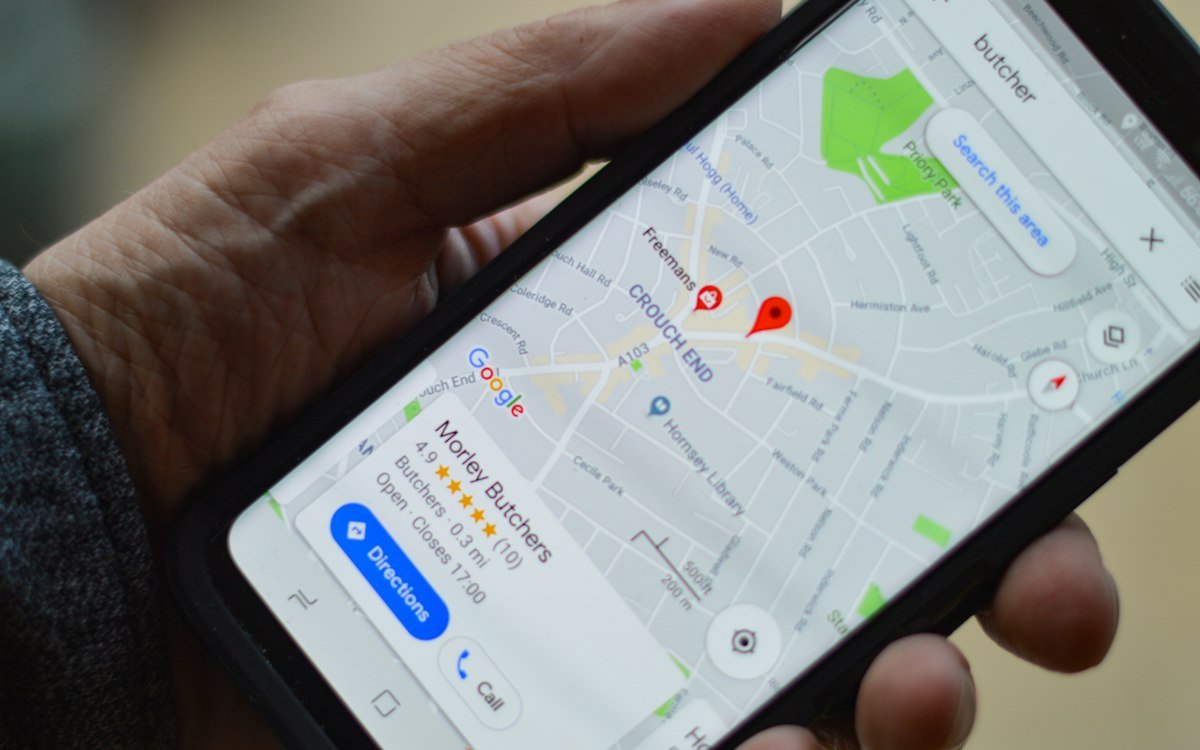
When someone searches for your service in your city, Google shows a map pack at the top with three local businesses. Getting into that map pack drives enormous click volume and it’s completely free.
Claim your profile immediately. Complete every single field. Add real photos. Write a keyword-rich description. Post updates regularly. Ask every satisfied customer for a review.
According to BrightLocal, businesses with complete Google Business Profiles receive 7 times more clicks than incomplete ones. Seven times. From a free listing. That’s one of the highest-return activities in all of local SEO.
Location Pages and Local Citations
If you serve multiple cities, build a dedicated page for each one. Each page is uniquely written, optimized for that city’s keywords, with genuinely useful local information. Not copied and pasted with just the city name swapped.
Local citations are mentions of your business name, address, and phone number across directories online. Consistency is critical. Every listing must show identical information. Even small differences like “St.” versus “Street” weaken your local authority with Google.
Step 6 — Content Strategy That Builds Authority Over Time
Blog With Purpose Not Just Frequency
Random blog posts about anything that feels relevant don’t build rankings. Every piece of content needs to target a specific keyword, serve a specific audience, and connect back to your core services through internal links.
Write about the real problems your customers face. Answer the questions they’re already asking Google. Prove your expertise before someone ever contacts you. That’s how content builds trust and trust builds customers.
Stay Consistent With a Simple Calendar
Two to four well-optimized posts per month beats ten rushed posts in January followed by six months of silence. Consistency signals to Google that your site is active and authoritative.
Our digital marketing services include full content strategy and creation for clients who want everything managed without lifting a finger.
Step 7 — Track Everything From Day One
- Google Search Console tells you how often your keywords are being seen in searches, how many people are clicking on them, where you generally show up on the page, and any technical problems with your site as they happen.
- Google Analytics is where you find out where your visitors are coming from, what they do once they’re on your site, how specific pages are doing, and whether they are completing your goals (that’s the conversion data).
- If you use a rank tracking tool, it’ll check your keyword rankings for you each week, allowing you to actually see your improvements and prove them.
- Backlink monitoring is good for discovering new links to your site, plus finding problematic or ‘toxic’ links you should tell Google to ignore before they hurt your site.
Set all of this up before anything else. Data from day one means every decision is based on evidence not guesswork.
How Long Does SEO Actually Take for New Websites
Four to eight weeks for initial keyword movements after proper optimization. Three to six months for meaningful organic traffic. Six to twelve months for competitive keyword rankings in established markets.
That feels slow. But SEO compounds. Every month with proper work in place makes the next month stronger. An ad stops the second you stop paying. An SEO ranking keeps delivering traffic for months and years without additional cost.
Our Google Ads management runs alongside SEO for new sites needing immediate traffic while organic rankings build. Both channels together accelerate results dramatically compared to either one alone.

What Digital Oasis Does for New Websites
We handle the entire process. Technical audit and fixes. Keyword research and mapping. Full on-page optimization. Local SEO setup. Content creation. Link building. Tracking configuration. Monthly plain-English reporting.
You run your business. We build your rankings.
15+ years of experience. Google Certified Partners. 100% client retention rate. Clients stay because results show up consistently month after month.
Final Thought
Every website dominating Google today started exactly where yours is right now. Zero traffic. Zero authority. Zero rankings. The difference between sites that made it and those still sitting invisible on page seven is simple. One followed the right SEO for new website consistently and patiently. The other didn’t.
At Digital Oasis we’ve taken hundreds of brand new sites from completely unknown to page one rankings that drive real business growth. The technical work, keyword strategy, content, backlinks, and local SEO are all built layer by layer until the rankings arrive and compound month after month. Your site deserves that same result. Get your free audit today and let’s start building yours.
According to SE Ranking’s 2025 analysis, around 94% of all webpages receive no traffic from Google whatsoever, and only 1% of web pages receive more than 10 clicks per month. That means the vast majority of websites — including well-designed, well-written ones — exist in complete digital invisibility. Not because they are bad. Because they skipped the SEO process, started it too late, or did it wrong from the beginning.
Source: SE Ranking
FAQs
Q: How do I get my new website to rank on Google fast?
Start with technical SEO and sitemap submission through Google Search Console, optimize every page for a specific keyword, and build your first backlinks through business directories and your Google Business Profile. SEO for new website speed depends on your industry’s competition level and how thoroughly your foundation is built from day one.
Q: How long does it take for a new website to rank on Google?
Most new websites see first keyword movements between weeks four and eight after proper optimization. Meaningful organic traffic typically builds between months three and six. Highly competitive industries can take six to twelve months for consistent page one rankings on valuable keywords.
Q: What is the first step in SEO for new website?
Before you do anything in SEO, get the technical stuff right. It doesn’t matter how great your content is or how many sites link to you if Google can’t get into and organize your website. So, make sure your site is fast, works well on phones, you’ve sent in a sitemap and Google can generally explore your site with no issues. Only after those things are in good shape should you start with other SEO tasks.
Q: Does a new website need backlinks to rank?
For local and long-tail low competition keywords sometimes not immediately. But for any competitive keyword in an established market, yes. Backlinks build the domain authority Google uses to decide which sites deserve top rankings. Start building through directories and Google Business Profile right away and scale from there.